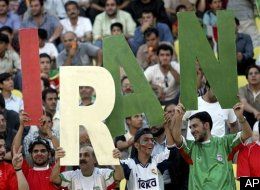
Iran is very pleased with the results of the invasion. We have closed our border with Pakistan to avoid any inflitration of our territory. We urge the United Kingdom and the United States to do the same in Afghanistan and India should remain at its border with Pakistan as well. As far as the dangers of the radiation, we have some very reliable sources that explain that the uranium is not as dangerous as it seems, but there will be some damage. The most important thing is that, as stated in the article "Chernobyl Rising Disarmament Successful," "no bombs exploded and no terrorist organization controls a nuclear arsenal" and that "all the Taliban died." Although Iran strongly supports peaceful resolutions to issues similar to this, it was a necessary course of action given the gravity of the situation and the possibility of a far worse outcome. Overall, the mission was very successful and Iran is very satisfied with the results, especially since there hasn't and there God-forbid won't be any severe damage that will extend far beyond the Swat Valley.
Sunday, May 24, 2009

Thursday, May 21, 2009
Response to a Fox News Article
Fox News stated the following in an article:
To start off the day, President Mahmoud Ahmadinejad sat down with us to discuss his plan of action. He beamed confidence from the second he arrived, and necessarily too, since what he had to say was hardly inventive. When asked about his thoughts on the demands of the Taliban, he said “As of having a Muslim state I don’t have much control over that”. Yes, maybe Ahmadinejad doesn’t have direct control over the negotiations with the Taliban, but why would he be involved in the numerous meetings discussing a resolution if he didn’t have any say. In combating terrorists it is highly difficult to have control, but it is simply a wise decision to know your stance on matters of high importance.
I said I don't have much control over that NOT that I have absolutely no power at all and I should just sit off to the side and let the other countries negotiate. I don't have direct control because I would not be giving up any Iranian territory. I am not just going through the motions. I am extremely active in our UN meetings something you, the media, is not involved in. Therefore, you need to further investigate the situation before you start assuming that Iran is standing by with a passive attitude towards this issue.
Tuesday, May 19, 2009
Iran has their Priorities Straight and Puts the Most Important Aspect of its Nation, its People, First
In today's press conference, Iran stated multiple times that we would do whatever it takes to protect our people. Our people come first and we must protect our Iranian citizens. We have only talked to the Taliban to try to reach a peaceful end to this issue so that innocent people, especially Iranians, are not hurt. Iran feels that the real terrorists are those that invade foreign territory and kill the innocent people that live in those territories. Iran is strongly against the bombing of the launch sites as the radiation and explosion could harm innocent people and more importantly Iranians. Violence is not an answer. We, the United Nations, need to find a way to please the Taliban and solve this problem before it becomes a true crisis. Overall, Iran will continue to seek a peaceful end to this issue and will always protect its gems, its people.
Sunday, May 17, 2009
White Paper
White Paper on the Taliban’s Possession of Nuclear Weapons by the Islamic Republic of Iran

Supreme Leader Ali Khamenei and President Mahmoud Ahmadinejad
Executive Summary: The Islamic Republic of Iran shares the concerns of the world community regarding the crisis at hand. A lot of attention has been put on Israel’s current state of security. However, we feel that India is in more imminent danger, as the relations between India and Pakistan have not been so great. The missiles that the Taliban possesses do not have the range to hit Israel, but do have the range to hit India since it is Pakistan’s next-door neighbor. It is not secret that we share some of the same ideals as those of the Taliban, but unlike the Taliban, we understand our boundaries. The Taliban has no boundaries. It has nothing to lose. As our government noted previously we must stop this situation before it becomes a true nuclear crisis.
Key Point:
• Israel should not be concerned. It is out of the missiles’ range and therefore cannot be considered to be at risk in this current crisis, as unfortunate as that is. However, we believe that the focus of the current situation should be on India’s security. Late last year, India suffered from terrorist attacks and now they are vulnerable to a more destructive attack. India’s main cities of Mumbai and New Delhi have combined populations of approximately 25.6 million people. These innocent people are easy targets for the Taliban and if the missiles are launched, they will be harder to stop because we will have less time to react as India is much closer to the launch sites than Israel.
Tuesday, May 12, 2009
Response to Israel's statement from the Press Conference
At today's press conference, Israel's comment was completely inappropriate, immature and not germane at all. I was wearing a tie as a sign of respect and high esteem for the issue at hand as this situation is very humorless. This is not a time to be jocular. In a time of such seriousness and danger, especially for Israel, this act of immaturity further proves that Israel should be wiped off of the map. A nation cannot survive with leaders who do not take dangerous situations seriously. Overall, Israel should not have a significant role in negotiations with the Taliban due to its lack of seriousness towards the situation during today’s press conference.
Monday, May 11, 2009
Reaction to News about Taliban Crisis
This issue has established some fear in our country, as Pakistan is a neighbor of Iran and in the event of a nuclear war, God forbid, our people would be in great danger. I was not aware of the Taliban's power in Pakistan. I have not and will not be involved with the Taliban unless it is to negotiate for a peaceful end to this issue. Iran has never had any nuclear weapons and our nuclear technology is only used for peaceful purposes such as the production of energy. However, I understand the seriousness of the situation and I will be assisting the Pakistani officials throughout this process. Thus far, I have only spoken briefly with some Pakistani officials, but I will be working very closely with them to solve this issue before it becomes a true crisis. I have full confidence in the fact that we, the United Nations, can come together and solve this issue. It will not be easy as some of us have had some past conflicts and there are some enemies within the UN. However, we will have to put that aside and do what is best for each of our countries. To accomplish this may take some time, but I will work assiduously to get the job done and settle this issue by any means possible. Overall, I have faith in the UN and will continue my support of the concept of nuclear nonproliferation and as I said before, we can stop this before our people are in very serious danger. As far as immediate actions, I urge the Pakistani government to take an initial step in establishing peace by taking effective control over the Swat Valley, while respecting the rights of the people of the region.
Friday, May 8, 2009
Assignment #4
What countries does Iran share the Islamic religion with?
Pakistan, India, and Israel share the Islamic religion with Iran.
Does Iran object to any, all or some religions of another country? Explain.
Iran does not object to any, all or some religions of another country. However, it is opposed to the policies of the Israeli government.
Define Sharia.
Sharia, Islamic law, has been defined as the path of correct conduct that God has given to the people through his messengers, specifically the prophet Muhammad. Today, there is no central authority for matters of Islamic law in Sunni Islam; however, some Shiites have authority structures. Sharia has also been described as ethics rather than as law.
What role does Sharia play in Iran?
Sharia plays a very large role in Iran since it is an Islamic state.
What is the role of religion and state in Iran?
The state is controlled by religious authorities. The Assembly of Experts, a group of clerics, choose who can run for office. The leader of the Assembly of Experts is the Supreme Leader of Iran. He has more power than the president and he appoints all leaders of powerful positions in the many aspects of the Iranian government. Therefore, Iran openly does not separate church and state.
Tuesday, May 5, 2009
Assignment #3
What is the numerical size of Iran's military?
There are 890,000 soldiers in Iran's military.
List Iran's weapons.
Shahab 1 (50-300 missiles)
Shahab 2 (50 -150 missiles)
Shahab 3 (25-100 missiles)
X-55 LACM (12 missiles)
1,613 tanks
List Iran’s greatest rival in chemical, nuclear, conventional, naval and aeronautical capabilities.
Israel is Iran's greatest rival in weapon capabilities.
Israeli weapons holdings: 15,985,000
Israeli nuclear weapons: approx. 100-200
Is Iran a nuclear power?
No, Iran is not a nuclear power. (Source: Nuclearfiles.org)
List the countries connected to Iran by land.
Afghanistan, Pakistan, Turkmenistan, Iraq, Armenia, Azerbaijan and Turkey are connected to Iran by land.
Is there a territory outside of Iran that has cultural, religious, or historical significance that makes Iran (citizens and government) feel invested in?
Iran has religious ties with Iraq because of Iraq's large population of Shiites. Iran also has a large amount of influence in Azerbaijan. Iran is connected to Azerbaijan through cultural and religious ties. They both share the Shiite religion and their languages are similar.
Assignment #2
1. What are some historical ties since 1914 between Iran and India?
March 4th, 2007 - Iran enters South Asian Association for Regional Cooperation with India’s support
1990’s - Iran and India are both party to the Northern Alliance in Afghanistan against the Taliban
Sept 10th, 1996 – The Comprehensive Nuclear-Test-Ban Treaty (CTBT) bans all nuclear explosions in all environments, for military or civilian purposes, according to the United Nations Treaty Collection. India and Iran are both party to this treaty
What are some historical ties since 1914 between Iran and Israel?
Iran and Israel recognized each other until 1979 when the Islamic Republic was established.
2. Has Iran fought any wars or battles directly, indirectly, or through proxy since 1914 against Israel or India?
Although Israel and Iran have not fought a direct war, this type of warfare is predicted to occur. Iran has indirectly fought Israel by supporting Palestine’s fight to destroy Israel. Iran also supports Hezbollah's fighting Israel in Lebanon.
India and Iran have never fought directly, but the Islamic Republic has a religious connection to Pakistan and supports the nation. Therefore, Iran indirectly fought India.
3. Does Iran have any significant religious disagreements with Israel or India?
Iran and India have had some religious conflicts because of the Muslim-Hindu issues in the past. The religions have different ideas about God and society. The conflict has spread and continues more aggressively today in Kashmir. Pakistan wants control over the area partially because of the large Muslim population that exists there.
Iran and Israel consistently have religious issues as well. Many believe the religious conflicts are a large obstacle holding these two nations from more peaceful relations. Some even believe that Iran’s antipathy for the Jews is so strong that it is trying to do repeat what Hitler did to the Jews. These beliefs originate from Iran’s multiple threats against Israel. The threats contain a very serious tone that worries many. The remarks have almost reached as far back as the beginning of Israel’s existence as a state.
4. Historically, have the relationships between India and Iran, and Israel and Iran been amicable, hostile, or neutral?
Between Iran and Israel, the relationship has been hostile because Iran consistently threatens Israel. These threats led to Israel’s warning that is ready to take military actions against Iran if necessary. More recently, US Army officials have stated that Israel might even attack Iran. It seems as though both sides have their hands on the button, but neither will push it. Iran also wants to wipe Israel off of the map and does not even formally recognize Israel as a nation. Therefore, a détente will not be made in the coming years.
Between Iran and India, the relationship has been relatively neutral. There has not been the extreme hostility of Iran towards Israel, but the two are not amicable. Most of their issues stem from religious differences. Even these differences do not lead to any serious threats or fighting. They get along well in matters such as anti-Taliban groups. There should not be any serious problems between these nations individually in the near future.
5. How do your government systems compare?
Iran has a theocratic republic, India has a parliamentary democracy, and Israel has a parliamentary democracy.
6. What major military and political treaties does Iran share with India or Israel since The Treaty of Versailles?
Iran and Israel – None
Iran and India – None
7. Is Iran currently recognized by the United Nations?
Yes, the United Nations recognizes Iran.
8. Does Iran share the same type of economic system as Israel or India?
Iran’s economy is a mixture of central planning, state ownership and limited private enterprise. India’s economy has a market-based system. This is more similar to pure capitalism than Iran’s economy. Israel’s economy is similar to Iran’s in that there is some state ownership and some private activity.
Assignment #1
1. What is your country’s governmental system? Provide a definition.
Iran has a theocratic, republican government. This is a system of government is a combination of a state in which Shiite clerics rule in the name of God, along with representatives that were elected by the people. Ultimate power is held in the hands of the religious authorities.
2. List five important events in your country’s history since 1914.
Iran gained its independence and became an Islamic republic in 1979.
Iranian students took control of the US Embassy in Tehran on Nov. 4, 1979 and had control until Jan. 20, 1981.
From 1980 to 1988, Iran fought a war with Iraq. This war was bloody, indecisive and eventually expanded into the Persian Gulf.
Nationwide municipal elections started in 2003.
The UN Security Council has passed a number of resolutions in July 2006, December 2006, March 2007, March 2008, and September 2008. These resolutions called for Iran to suspend its uranium enrichment and reprocessing activities and comply with its IAEA (International Atomic Energy Agency) obligations and responsibilities.
3. What is your country’s economic system?
Large economic activity is controlled by the state, but private activity is limited to small-scale workshops, farming, and services.
4. List your nation’s five largest trading partners?
Imports (2007)
China 14.2%, Germany 9.6%, UAE 9.1%, South Korea 6.3%, Russia 5.7%
Exports (2007)
China 15%, Japan 14.3%, Turkey 7.4%, South Korea 7.3%, Italy 6.4%
5. What is the monetary size of your domestic and foreign debt?
Domestic – 25% of GDP (2008 est.)
Foreign – $21.77 billion (31 December 2008 est.)
6. To which country does your country owe the most money?
Bank Markazi (central bank)
7. What is the numerical size of your standing and reserve armed forces?
Standing - 540,000
Reserve - 350,000
8. Are you a nuclear power?
No, Iran is not a nuclear power.
9. List your country’s most important cultural values.
Sharia – Islamic law
People are strongly in favor in the preservation of the Islamic Republic
Respect for pre-Islamic, Persian traditions (ex. Persian New Year)
10. To what extent, if any, does your government control media and culture? Briefly describe.
Iran's media is owned privately and publicly, but is subject to the control of the government’s strict censorship programs. These programs limit the availability of information, especially Western influences and anything seen as going against the religious regulations.
11. List your country’s most important resources.
Petroleum, natural gas, coal, chromium, copper, iron ore, lead, manganese, zinc and sulfur
12. List the important resources your country lacks.
Machinery and transportation equipment, foodstuffs, livestock, paper, chemicals, pharmaceuticals, metals and textiles
13. What is your country’s population?
66,429,284 (July 2009 est.)
14. What is your country’s main religion? What percentage of your people practices this religion?
Muslim 98% (Shiite 89%, Sunni 9%)
15. List other religions, if there are any, which play an important role in your country.
Other (includes Zoroastrian, Jewish, Christian, and Baha'i) 2%
State recognizes all but Baha’i because they are not “People of the Book”
16. What is your government’s policy towards religion and state?
State is under control of religion’s authority
Assembly of Experts – group of clerics
They choose who can run for office
Openly don’t separate church and state
Subscribe to:
Posts (Atom)